ij8 Pilots
ij8.ai

Institutional pilots · grants · partnerships

Creative coding was never only about code. It was always about inventing a new expressive medium.

Ira Greenberg's work — painter, Processing author, professor — has helped define creative coding as a bridge between art, design, and computer science. He directs the Center of Creative Computation at SMU in Dallas and has built creative-computation pathways across graduate, undergraduate, community-college, and high-school contexts. ij8 carries that arc into the age of generative AI: a working studio-classroom where students make real work across image, video, 3D, sound, and code — and learn to direct AI rather than be replaced by it. This page is for the people who fund and approve that work: deans, district and CTE leaders, grant officers, museums, and foundations.

Animi by Ira Greenberg
Animi
Premise

The move is not from coding to AI. It is from narrow tool use to a richer collaboration between human intention and machine generation.

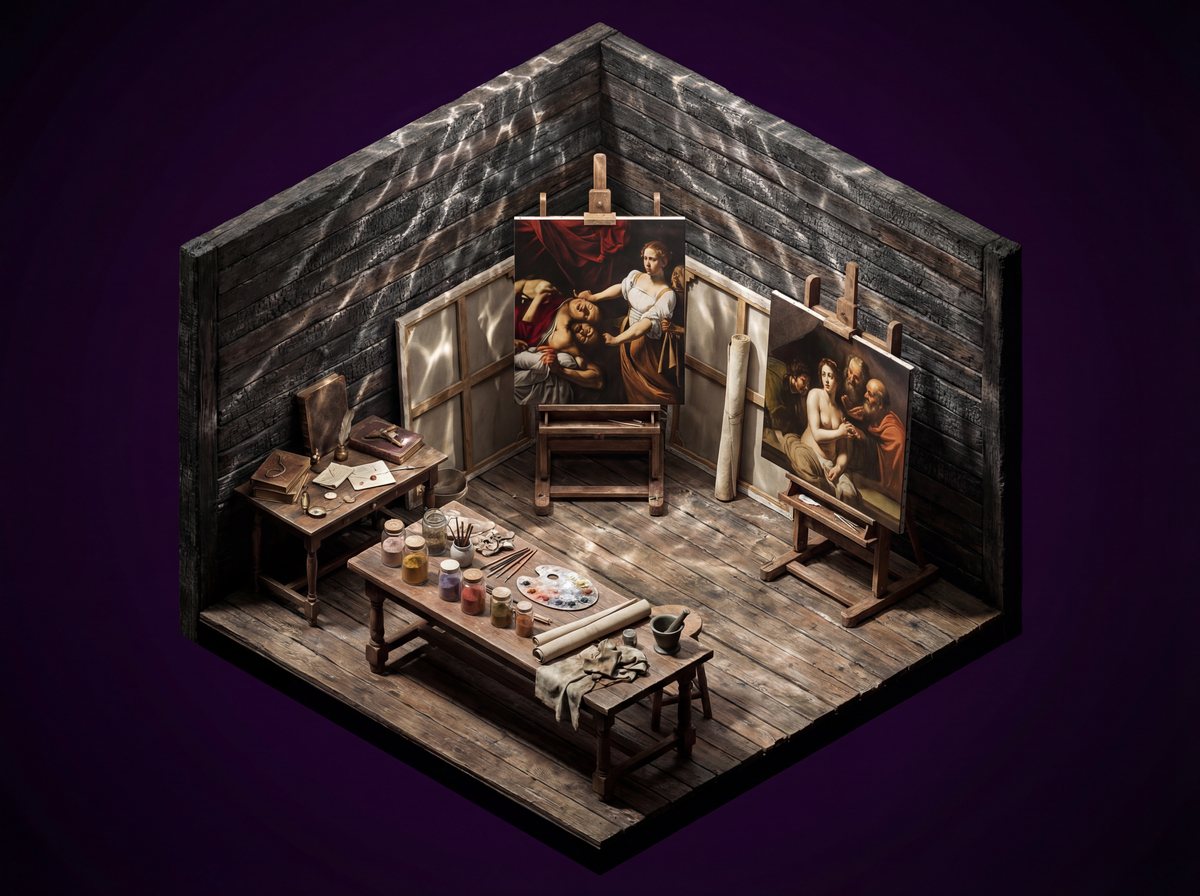
La Collezione Isometrica degli Studi degli Artisti 005
Isometric Studies

From the studio

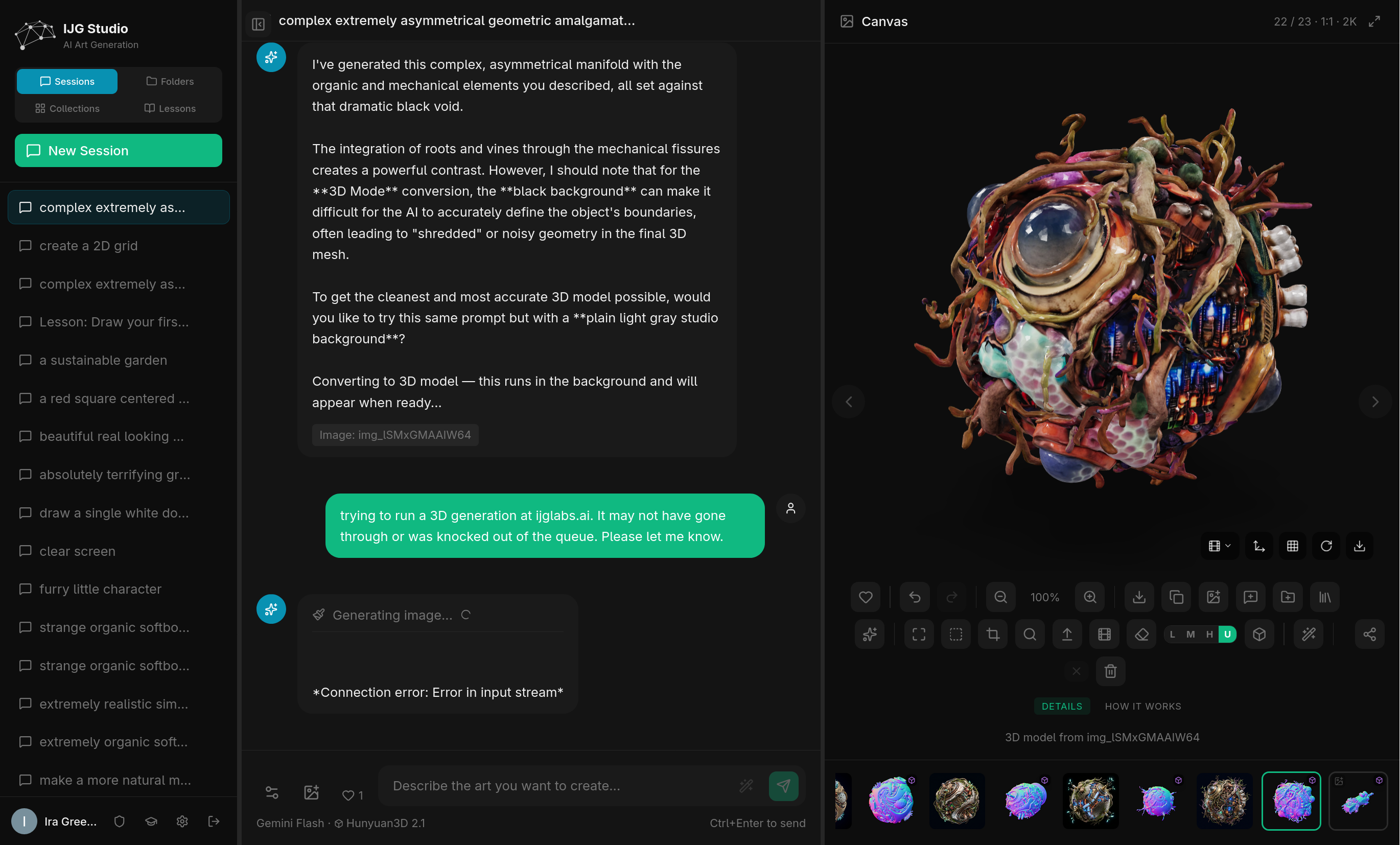
Work made on the platform itself — generative form, motion, and 3D from the same canvas students learn in.

Amalgam 001
Amalgam 002

The lineage

From Processing to AI-native creative computation.

2007

Processing: Creative Coding and Computational Art

Greenberg authored what its publisher calls "the first Processing book on the market" — a comprehensive reference that helped establish code as an artistic medium and opened the door for artists and designers entering computation.

2013

Processing: Creative Coding and Generative Art in Processing 2

The follow-up text translated NSF-backed teaching practice into an introductory computing framework, linking digital arts pedagogy with core CS learning outcomes.

Now

ij8

The same arc now runs through generative AI, 3D, sound, public exhibition, and on-chain publishing: a studio-classroom-gallery ecosystem where learners create with computation rather than merely consuming automation. The full, cited history — from painting through Processing to long-form generative AI — is the legacy essay at vision.ij8.ai.

The premise — a middle way

The classroom does not need more synthetic speed. It needs better structures for judgment, experimentation, and reflection.

Two responses to AI dominate education, and both fail students. Banning it pretends away the tools that now sit under most professional practice. Handing it the work produces output without understanding. ij8 takes the path between them: students use AI in the open, are coached while they work, and are assessed on their thinking — the student brings the vision, the taste, and the questions; the AI brings the speed and the hands. The full teaching reference — pedagogy, authoring, scoring, and the learning research behind it — is at classroom.ij8.ai.

01

Code as expressive material

Creative coding always treated code as a medium for drawing, motion, emergence, structure, and play. AI expands that field rather than replacing it.

02

AI as collaborator, not shortcut

The student directs; the AI implements. The pedagogical target is judgment, taste, iteration, and systems thinking — prompting, shaping, editing, comparing, critiquing, and reflecting.

03

Studio pedagogy over syntax drills

Students learn most deeply when they build meaningful artifacts. The classroom becomes a studio: make, inspect, revise, discuss, and exhibit.

The platform, as shipped

A working studio-classroom, documented in public references.

ij8 is live at ij8.ai. What follows is the platform as it ships today, not a roadmap. The complete, dated catalogues are public: tooling.ij8.ai for the studio, classroom.ij8.ai for the teaching layer.

A multi-modal studio

Image, video, 3D, sound — music, sound effects, and video-to-audio foley — and running code live in one chat-driven canvas. Work moves between media without leaving the environment: a sketch becomes an image, an image becomes a mesh, a video gets its soundtrack.

Creative coding, four frameworks

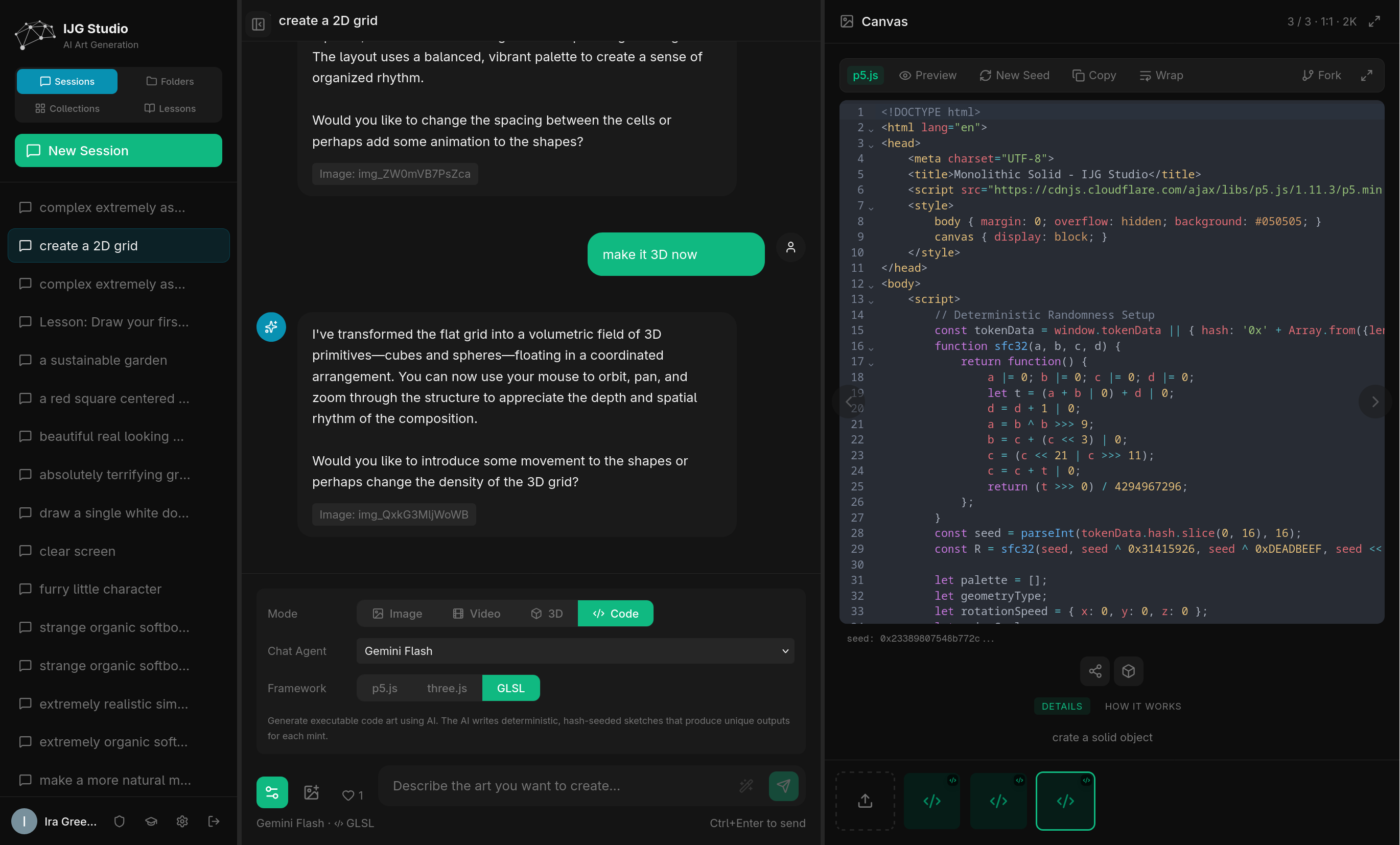
p5.js, three.js, GLSL, and Tone.js, with an audio-plus-visual mode that pairs sound with the sketch. A freehand drawing pad feeds both worlds: render the drawing as an image, or hand it to the code model and get the form back as live geometry.

A classroom built into the same surface

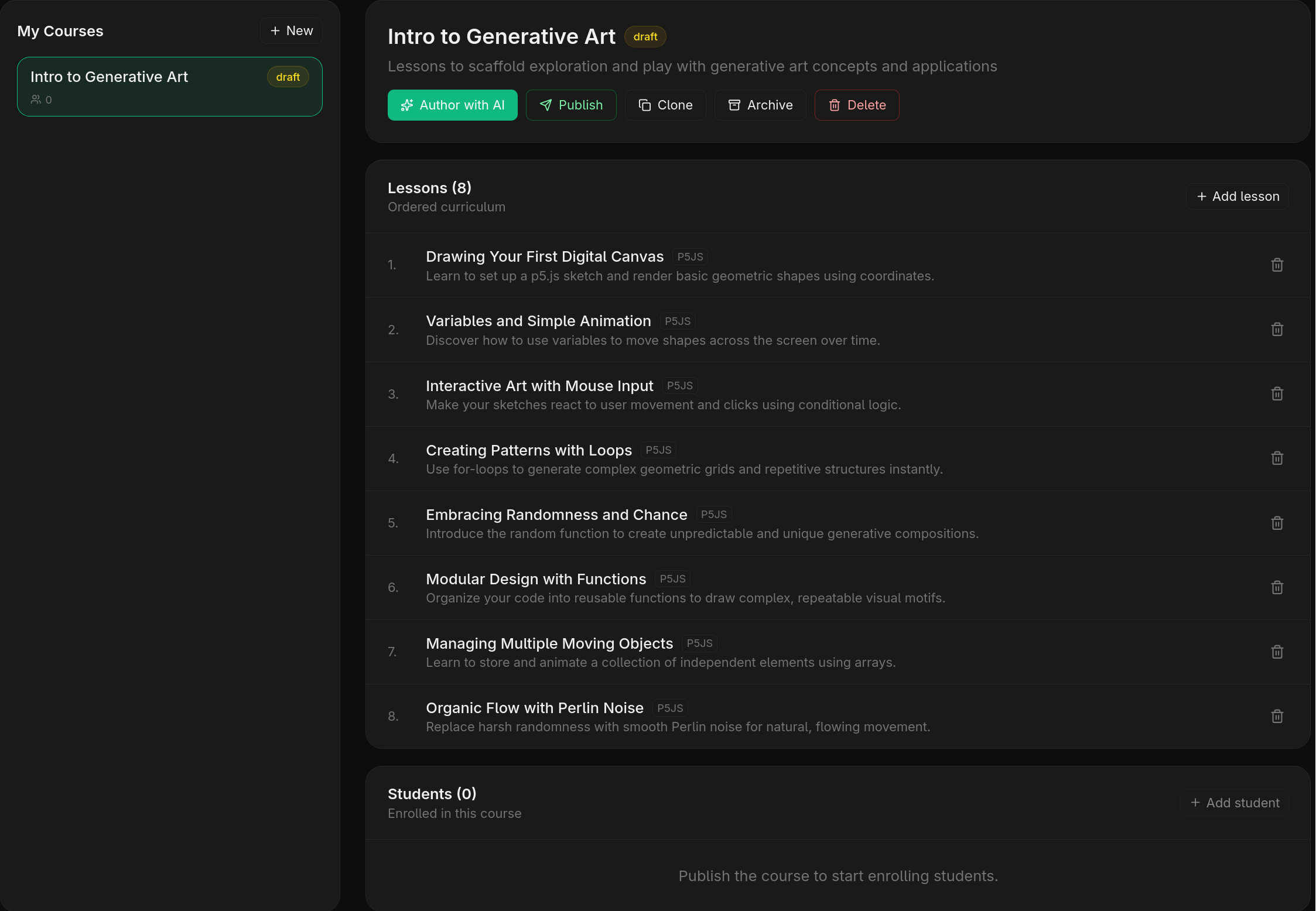
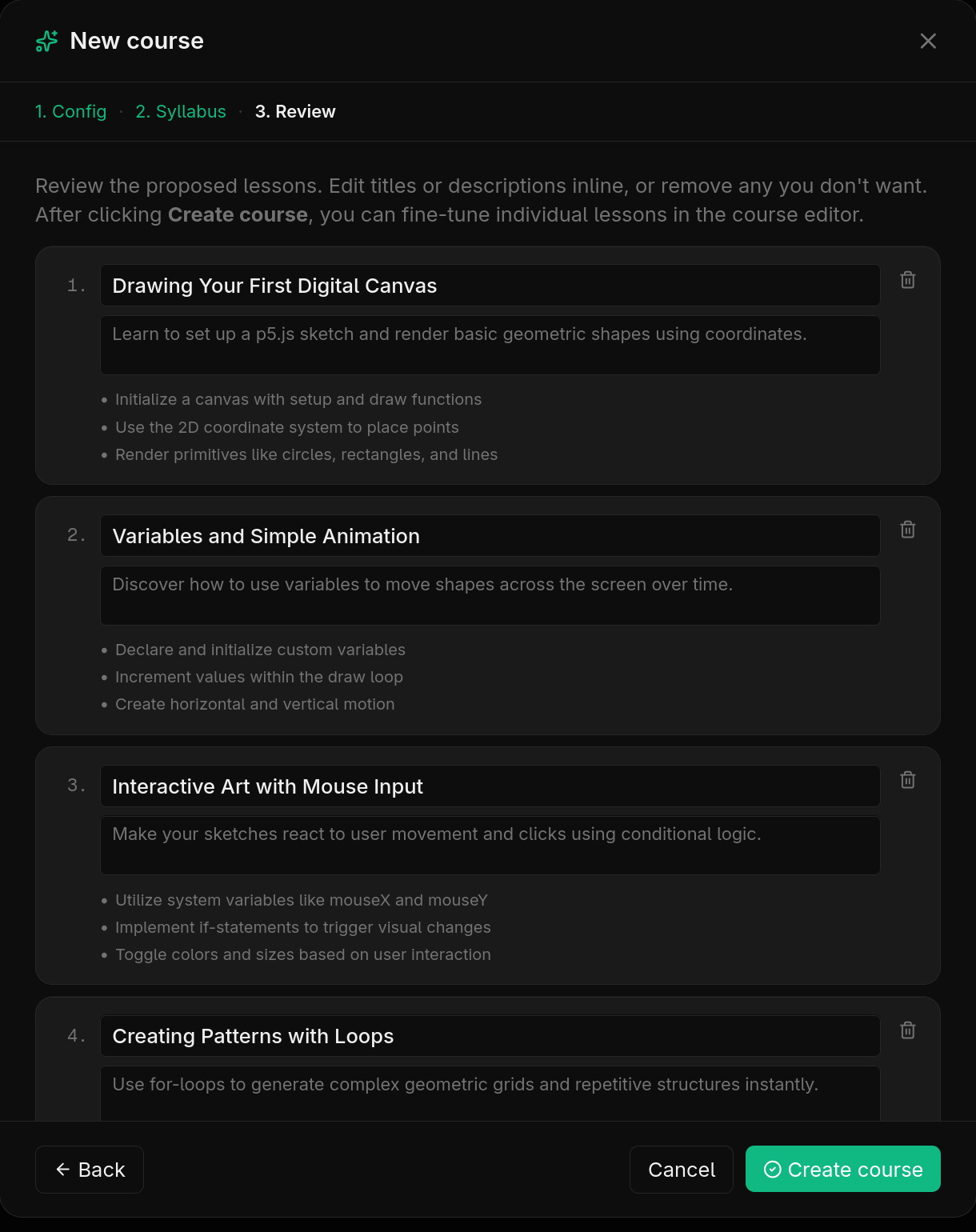
Teachers author courses in one sitting — starting from an existing syllabus if they have one. Lessons are self-paced and graded by a transparent five-dimension rubric that weighs process and understanding over polish, and every attempt and score is visible to the instructor.

Fifty vetted tutorials

Concept tutorials walk one idea — recursion, particle systems, how diffusion models work — along a fixed Explain → Show → Play → Make arc, with every illustration vetted before a student sees it. Teachers author their own and share them through a cross-teacher Commons.

Explainability as a feature

Every generated sketch carries Preview, Gist, How-it-Works, and Code layers, so generated work is a teachable object rather than black-box spectacle — surfaces for interpretation, critique, and revision.

From classroom to exhibition

Storyboard projects develop larger work and present it with narration and soundtrack. A teacher-curated public showcase (showcase.ij8.ai) gives class work a real audience, and the same platform runs a professional gallery with on-chain publishing (gallery.ij8.ai) — students can see the actual pipeline from practice to public work.

Another register

The range of the work — geometric, spatial, and observational alongside the more biomorphic pieces.

Geoform by Ira Greenberg
Geoform

Evidence in practice

A live system with real classroom miles on it.

ij8 is not a mockup or a deck: it has run live workshops and multi-week student cohorts, and the views below are captures of the working system — a studio surface, a guided workflow, a public-facing outcome, and the code layer that connects authorship to rendered result.

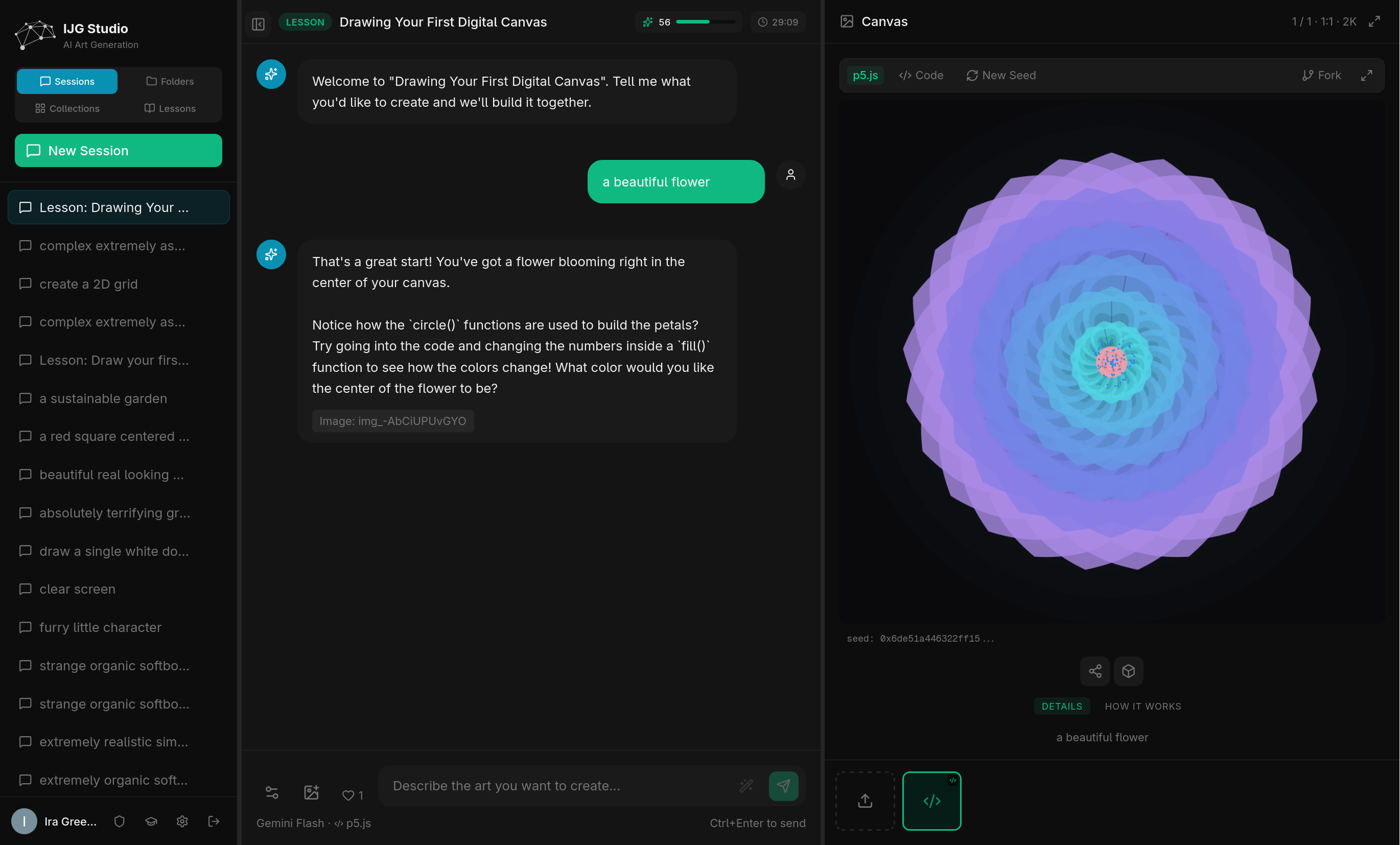
ij8 studio workspace screenshot
Live studio workspace

The studio is a working environment: learners move from prompt to artifact inside an actual creative interface, not a speculative mockup.

ij8 guided workflow screenshot
Guided workflow and revision surface

The platform supports more than generation: a structured surface for sequencing, comparing, refining, and discussing work as it develops.

ij8 public-facing outcomes screenshot
Public-facing outcomes

Work does not stay trapped inside a classroom tool. ij8 connects process to presentation, giving student and artist work a visible endpoint beyond private exercises.

ij8 code editor view with p5.js source
Code as a first-class surface

Learners do not just receive generated output. They open, read, and modify the underlying code, so the platform builds literacy and authorship rather than consumption.

ij8 rendered canvas output from learner code
Code meets rendered outcome

Edits to the source become visible artifacts on the canvas in the same view — conceptual instruction, code, and aesthetic result as a single teachable unit.

Position

Not a chatbot wrapper. Not courseware. A studio.

Most AI-in-education products are a chat window with school branding, or courseware with an AI assistant bolted on. ij8 is structurally different, and the differences are the pedagogy.

A studio, not a chatbot

Students produce artifacts — images, animations, 3D forms, sound, running code, working app prototypes — not chat transcripts. The conversation is the means; the work is the unit of assessment and exhibition.

Process is graded, not just product

The rubric weighs engagement, originality, mastery, process, and understanding, judged against the actual rendered artifact alongside the student's own explanations. A polished one-shot prompt scores worse than visible iteration — the opposite of completion-tracking courseware.

The AI cannot wander

Tutorials run on a deterministic phase arc with illustrations vetted and frozen before students see them. Lesson tutors follow instructor-written hints, each marked as a soft nudge or a hard rule. This is precisely the "guardrails" condition the learning research now says separates AI that teaches from AI that becomes a crutch.

A real public endpoint

Student work ends in a teacher-curated public exhibition — and the platform itself runs a professional gallery with on-chain publishing. Students practice inside the same pipeline working artists use to reach an audience.

Built by the person who wrote the books

The pedagogy descends directly from the Processing texts that taught a generation of artists to code. This is not a product team discovering education; it is thirty years of teaching practice acquiring an AI-native platform.

Operations

Compute, governance, and the questions procurement asks.

A classroom needs compute that scales to a full class and matches the course's funding model. ij8's routing is policy-driven, set per class by the institution's own rules.

Where student work runs

Student work runs on the studio's own GPU by default — no setup, no per-student configuration. Eligible classes can be granted access to a university supercomputing cluster for educational, non-commercial work, while paid or commercial courses route to a commercial cloud backend. The separation is enforced by policy, per class — a requirement of university compute, not an afterthought.

Identical conditions when it counts

A class can be pinned to a single backend so every student's work runs the same way — which matters when a lesson is timed or graded.

Caps that protect shared budgets

Course-level and lesson-level usage limits combine, and the stricter limit wins, so a live class cannot exhaust a shared resource. Each lesson session displays its AI-usage budget to both student and teacher.

Rosters ready on day one

Student emails can be pre-assigned to classes before anyone signs in; on first sign-in students land in the right classes, already enrolled. Publishing a course produces a join code for everyone else.

A record you can take elsewhere

Teachers get a live class summary, a spreadsheet export with the full rubric per attempt, an optional AI-written narrative of class progress, and per-attempt comments. Finished work is shared through stable public links — the current bridge to an outside gradebook (there is no LMS integration today, and this page will not pretend otherwise).

Student privacy

Safe by default. Public by choice.

The privacy questions districts ask are design facts here, not retrofits.

Whitelist-first access

Accounts enter through an email whitelist and roster pre-assignment. There is no open signup, and a class roster is the teacher's to control.

A conservative student baseline

By default students can write and edit code and use core learning tools; image, video, 3D, audio, and app generation stay off until a teacher turns them on for a class. Grants only ever add capability — nothing a student has is silently revoked.

Public by choice only

Student work becomes public through exactly one path: the student submits it, and the teacher approves it. A public piece shows an opt-in author credit only — a student's account name is never published.

Share links hide the person

A submitted lesson produces a read-only public link to the finished work and its score. It never exposes the chat transcript or the student's account.

Operator-run infrastructure

The platform runs on infrastructure the studio operates. Student work is not resold, repackaged, or fed to ad-tech — and this page itself ships with no trackers, no analytics, and no external scripts. Data-flow documentation for formal privacy review (FERPA and state student-privacy statutes) is scoped with each institution during pilot setup.

Operational precedents

The thesis already travels: state-specific AI literacy pathways.

The same educational logic has been articulated for multiple public-sector contexts — and the 2025 federal posture (an executive order on AI education, and Department of Education guidance explicitly allowing federal grant funds for AI instructional tools) gives these pathways live funding language. For grants, pilots, and funders, this matters: the thesis is portable.

AI Literacy CTE Pathway — New Mexico

A state-specific high school pathway framed around Perkins alignment, local workforce relevance, and institution-ready launch conditions.

View program ↗

AI Literacy Texas — CTE Pathway for Texas High Schools

A district-facing program argument tied to Texas CTE realities, funding language, and practical adoption pathways rather than abstract AI enthusiasm.

View program ↗

AI Literacy CTE Pathway — Colorado

A state-adapted variant showing the platform and curriculum logic travel horizontally while still respecting local policy and implementation context.

View program ↗

Pilot formats

Three shapes of engagement, each with a visible outcome.

Every pilot includes the same spine: a working course built in the instructor's voice, compute, every-attempt visibility for the teacher, exportable reports, a public end-of-term showcase, and a direct line to the founder. The institution brings an instructor, a roster, and a meeting cadence.

01

Higher education studio pilot

One course or section — typically a semester, or an eight-to-fifteen-week module inside an existing course. For art, design, media arts, creative technology, and interdisciplinary computing programs that want AI literacy to live inside studio practice rather than beside it.

02

Secondary + CTE pathway

A semester unit, summer intensive, or dual-credit block, with age-appropriate capability grants and rosters pre-assigned before day one. Maps to CTE program-of-study and Perkins funding language — the state pathway sites above are the template.

03

Grant-backed implementation

For museums, labs, foundations, and public-sector programs: a scoped implementation with named deliverables — a working course, a public exhibition of learner work, and an exportable record of outcomes a funder can audit.

Research and policy

The design matches what the evidence now says.

The research question is no longer whether AI belongs in classrooms — it is which designs help and which harm. ij8's architecture takes a side, deliberately.

Unguarded AI becomes a crutch. Guardrails change the outcome.

A large field experiment published in PNAS (2025) found high-school students using unrestricted GPT-4 performed worse once it was taken away — but a tutor constrained by teacher-designed hints erased the harm. ij8's lessons and tutorials are exactly that constraint: instructor-authored hints, deterministic arcs, and process-weighted grading.

PNAS ↗

Well-designed AI tutoring measurably works.

A randomized controlled trial in Harvard's largest introductory physics course (Scientific Reports, 2025) found a purpose-built AI tutor with expert-authored scaffolds roughly doubled learning gains over an active-learning classroom. The result is about design, not model size — the scaffolds are the product.

Sci. Reports ↗

Learning to program still matters — more, not less.

Joint guidance from TeachAI and the Computer Science Teachers Association argues computer science education becomes more important in an age of AI, with students as critical consumers and responsible creators of AI rather than passive users.

TeachAI / CSTA ↗

Global frameworks now name creating with AI, not just using it.

UNESCO's AI competency framework for students (2024) defines twelve competencies that progress from understanding to applying to creating with AI — aiming at "responsible users and active co-creators," which is the studio stance stated as policy.

UNESCO ↗

Keep teaching centered on creativity, expression, and self-direction.

Harvard GSE's Creative Computing Lab argues for staying "centered on creativity, expression, self-direction" and only then asking how the technology advances those aims — the order of operations ij8 is built around.

Harvard GSE ↗

The federal posture turned, April–July 2025.

Executive Order 14277 ("Advancing Artificial Intelligence Education for American Youth," April 2025) made AI literacy a national priority, and the Department of Education's July 2025 Dear Colleague letter confirmed that existing federal grant funds — formula and discretionary — may support AI instructional tools and educator training. The funding language for pilots now exists.

ED.gov ↗

What learners gain

  • Artists and creators without conventional technical backgrounds enter computation through making, not gatekeeping.
  • Students learn to direct AI with taste, ethics, context, and visual literacy rather than passive dependence.
  • Creative coding remains central, amplified by systems that can generate, explain, transform, and prototype at new scales.
  • Every student leaves with public, shareable work: a portfolio piece with a real audience, not a worksheet.

The wager

If the first wave of creative coding made computation legible to artists, the next wave must make AI legible, critiqueable, and creatively pliable.

That means teaching people how to work with models while staying grounded in form, concept, craft, ethics, and public expression. Not "learn a tool." Not "prompt and pray." A disciplined creative environment where artists and students build computational fluency by making work that matters.

Work with ij8

The strongest immediate uses are pilot programs, grant-backed implementations, and institution-level partnerships that need both a serious pedagogical stance and a live platform underneath it.